


Skin Treatments
Adore Clinics offers a range of carefully administered skin treatments to assist in refreshing your appearance.
Help reduce fine lines and wrinkles
Rejuvenate skin with anti-ageing treatments
Promote skin hydration and elasticity

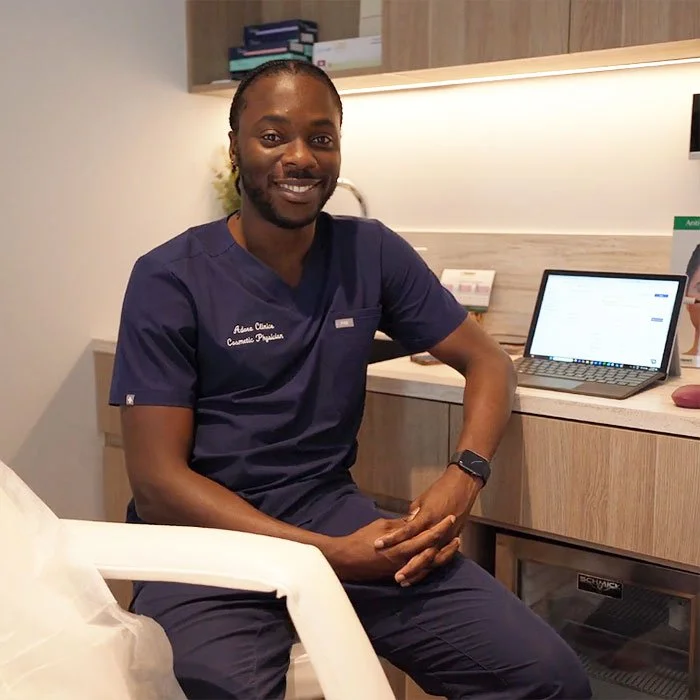
Your consultation with Dr Daniel
At Adore Clinics, we work closely with you to assess your skin, understand your concerns and recommend the most suitable treatment options. Your journey to healthier skin starts with a comprehensive skin consultation, where we tailor a plan to meet your specific goals.
Review your medical history
Identify any allergies
Assess current medications
Examine your skin


Our skin treatments services
-
Anti-ageing treatments aim to reduce the appearance of fine lines, wrinkles and other signs of ageing. At Adore Clinics, we offer a variety of cosmetic skin treatments to address these concerns and enhance your skin's health and appearance.
As your skin ages, it loses elasticity, leading to the formation of lines and wrinkles.
Repetitive facial movements, such as frowning, squinting, laughing and smiling can accelerate this process by causing muscle contractions that create creases in the skin.
Treatment aims to relax these overactive facial muscles to promote smoother skin. Treatment areas may include the forehead, eyebrows, chin or around the eyes and nose.
There are potential risks and side effects associated with any treatment. Dr Daniel will discuss these with you before you decide to proceed.
-
Your face is constantly exposed to damaging UV rays, chemicals and other toxins, which can make your face look older than you feel.
Using innovative suction technology, Hydrafacial thoroughly cleanses, exfoliates and nourishes your skin. You can also add on a customised nutrient infusion if you wish.
You might consider Hydrafacial if you wish to:
Clean bacteria, oil and dead cells from your pores to refresh your skin’s appearance
Reduce blemishes
Smooth your skin
Create a more even skin tone
Nourish and hydrate your skin.
Hydrafacial is a versatile treatment that can be used by people with oily skin and those with dry skin. However, it is not suitable for everyone. Dr Daniel will review your medical history carefully and advise you on which treatments are most likely to help you.
-
Healthy skin starts with hydration. When your skin has enough moisture, it tends to look plumper, feel smoother and reflect light more evenly. When it doesn’t, you may notice dullness, tightness, flakiness and fine lines that deepen when your skin is dry.
Why skin loses moisture
Your skin has a natural barrier that helps it hold on to water. This barrier is made up of oils, proteins and other compounds that work together to slow moisture loss and protect against external irritants. Over time, and for a range of reasons, this barrier can become compromised.
Age is one factor. According to Harvard Health, skin produces less of the natural oils and structural proteins that support hydration as you get older. Skin cell turnover also slows down as you age, meaning your skin takes longer to repair and renew itself.
Sun exposure is another concern. UV radiation can burn the skin and cause long-term changes to its barrier. Environmental factors like air conditioning, low humidity and wind also draw moisture from the surface of your skin throughout the day.
Lifestyle plays a role, too. Diet, sleep, stress and skincare habits can all affect how well your skin retains moisture. Even well-intentioned, hydrating skincare routines can sometimes strip the skin if the products used are too harsh.
When dehydrated skin becomes a bigger concern
There are moments when dry skin can go beyond the occasional patch and become more difficult to manage. You may notice that your skin feels consistently tight or looks dull, regardless of the season. It may also appear more fragile or reactive than usual, flushing easily or feeling irritated by products that did not previously cause issues.
In some cases, fine lines can appear more pronounced than you would expect for your age, and your skin may lose that sense of bounce and firmness it once had. These more persistent signs can sometimes mean your skin needs more targeted care to get back on track.
How to hydrate your skin
There are a number of practical steps you can take to support your skin’s hydration.
At home, the basics go a long way. Drinking enough water, eating a balanced diet and getting adequate sleep all contribute to how your skin looks and feels. Applying sunscreen and moisturiser helps reduce sun damage and water loss throughout the day. Avoiding very hot showers and limiting time in air-conditioned environments can also make a difference in keeping your skin hydrated.
That said, lifestyle and at-home care alone do not always produce the results people are looking for, particularly if your skin has been struggling for a while or if the signs of dehydration are more persistent. This is where professional skin treatments can play a role, working alongside your daily routine to give your skin more targeted support.
How we approach skin hydration at Adore Clinics
At Adore Clinics, we offer a range of treatments to help support your skin’s hydration, based on your individual concerns, your lifestyle and the results you are hoping to see.
Some people find that a combination of treatments works best for them. Others may only need one to see a meaningful difference in how their skin looks and feels. There is no single approach that works for everyone, and we will always take the time to find what works for you.
If you have been struggling with persistently dry, dull or dehydrated skin and want to understand your options, a consultation with Dr Daniel (MED0002346964) is a good place to start.
Contact us today to take the first step towards healthier, more hydrated skin.

Risks and side effects
Like any medical procedures, there are potential risks and side effects with cosmetic treatments. Depending on your chosen procedure, the risks may include bruising, bleeding or swelling at treatment sites or post-treatment headaches.
Though it’s uncommon, some patients may experience infections or allergic reactions, minor and temporary muscle droop (e.g. around the eyebrows or eyelids). In rare cases, you may experience blurred vision or difficulties swallowing or breathing.
Dr Daniel will advise you of possible risks before your treatment so you can make an informed choice and know what to expect. Should you experience any complications or side effects, you’re encouraged to contact him for advice and support.

Murad range
We’re proud to stock Murad, a dermatologist-developed range of skincare products designed to nourish your skin at the cellular level. The Murad range is managed and prescribed in clinics, ensuring that each product is tailored to your specific skin needs. These special formulations are based on the idea that skincare is healthcare and self-care. We couldn’t agree more!
Frequently asked questions
-
The first step is a consultation with Dr Daniel (MED0002346964). During this appointment, your skin will be assessed, and your medical history and current concerns will be discussed. This will help us determine whether any of our treatments are appropriate and outline suitable options. We’ll also discuss expected outcomes, potential risks and aftercare before making any decisions.
-
Adore Clinics offers a range of treatments that aim to support overall skin quality, including options focused on skin hydration, texture, premature signs of ageing and general maintenance. Our treatment recommendations are based on individual skin characteristics rather than a one-size-fits-all approach.
-
Anti-ageing treatments at Adore Clinics are approached from a clinical perspective, with the aim of supporting skin structure and quality over time. These treatments may address factors such as skin hydration, elasticity and the appearance of fine lines. The specific approach varies between clients and is determined following a detailed consultation. Outcomes differ depending on individual factors, including skin condition and lifestyle.
-
A Hydrafacial is a multi-step skin treatment that typically involves cleansing, exfoliation, extraction and hydration. It’s designed to remove surface impurities while delivering hydrating ingredients to the skin, potentially resulting in a smoother skin texture and improved skin hydration. As with all treatments, results can vary, and suitability is assessed during consultation.
-
There is no single treatment that suits everyone. The most appropriate option depends on factors such as your skin type, current condition, medical history and treatment goals. A consultation allows our practitioners to assess these factors and recommend a plan that aligns with your needs. In some cases, a combination of treatments may be discussed.
For individuals researching how to hydrate skin, treatment selection will depend on the underlying cause of dehydration and how the skin is currently functioning. This may include a combination of in-clinic treatments and at-home care, based on clinical assessment.
-
All skin treatments carry some level of risk. Common side effects may include temporary redness, sensitivity or mild swelling, depending on the treatment performed. Less common risks can also occur and will be explained in detail during your consultation to help you make an informed decision.
-
Yes, we stock Murad, a dermatologist-developed range that is prescribed and managed in-clinic to ensure suitability for your individual skin type and treatment plan.
The range is selected to complement your in-clinic care and help you maintain your skin between visits. We’ll provide guidance on appropriate product selection and how to incorporate them into your routine during your consultation.
-
The frequency of treatment depends on your skin condition, lifestyle and how your skin responds over time. Some individuals may only need occasional treatments, while others may incorporate them into a longer-term plan. This will be discussed during your consultation and reviewed as needed.
-
At-home hydrating skin care can support the skin barrier and help maintain moisture levels. However, in some cases, it may not fully address persistent dehydration. Professional treatments may be considered as part of a broader approach, depending on individual needs.
-
Pre- and post-treatment care may vary depending on the procedure. You may be advised to avoid certain products or activities before treatment and to follow specific aftercare instructions to support recovery. These details will be provided during your consultation to help support optimal outcomes and reduce the risk of complications.